Otto Coleman · 20 October 2026
Exploring Encryption Protocols for Secure Sharing in Field-Based Note Management Systems
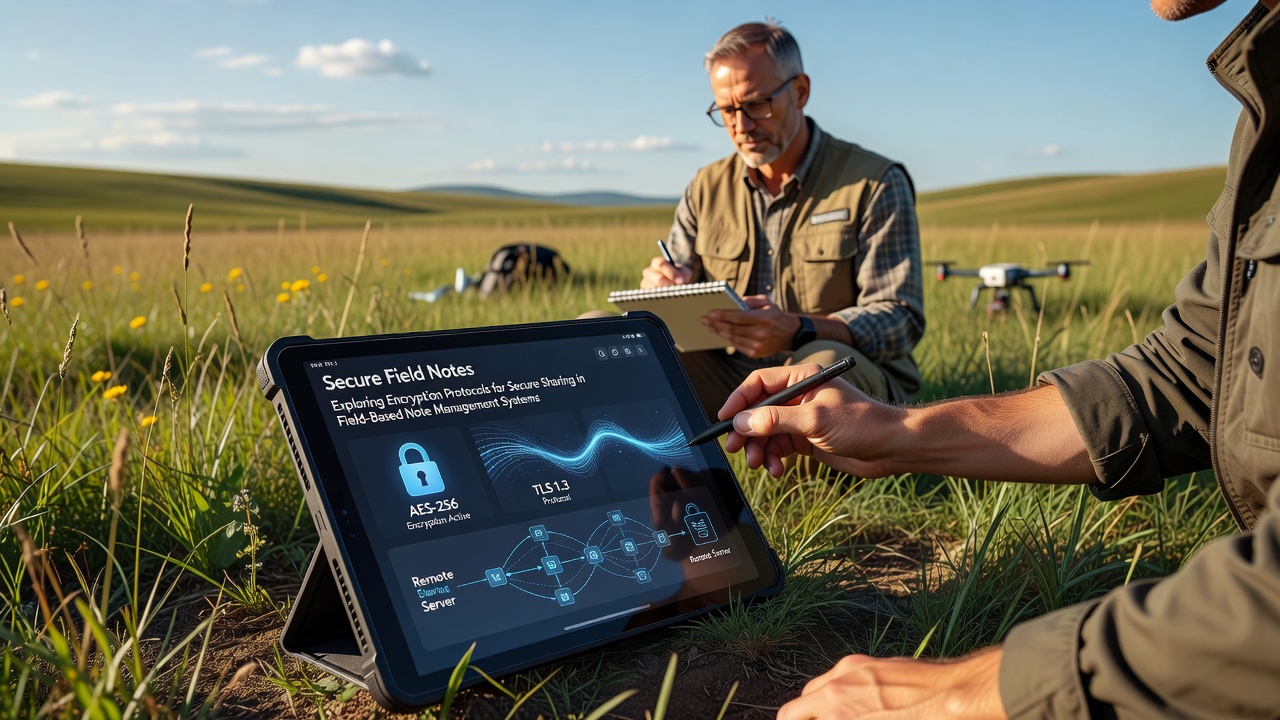
Encryption protocols form the backbone of secure data exchange in field-based note management systems where professionals record observations in remote locations and transmit them to central repositories. These systems handle sensitive information ranging from environmental surveys to medical fieldwork notes and they require robust methods to prevent unauthorized access during both storage and transmission. Standards organizations such as the National Institute of Standards and Technology have outlined specifications for algorithms that protect data integrity across distributed networks.
Advanced Encryption Standard remains a primary choice for encrypting note content at rest because it processes blocks of data efficiently on mobile devices used in the field. Researchers have documented its performance across multiple studies that compare it with other symmetric ciphers while noting its resistance to known attacks when implemented with sufficient key lengths. In practice field teams often combine AES with asymmetric methods to handle initial key exchanges between devices that operate in areas with intermittent connectivity.
Core Protocols Supporting Secure Note Sharing
Transport Layer Security secures the channel between field applications and backend servers by negotiating session keys that change with each connection and this approach reduces risks associated with long-lived credentials. Observers note that TLS 1.3 has seen wider adoption in recent years because it eliminates legacy vulnerabilities present in earlier versions and streamlines the handshake process for low-bandwidth environments. Field-based systems benefit from these improvements since workers frequently sync data over cellular networks that vary in reliability.
End-to-end encryption extends protection beyond the transport layer so that note content stays encrypted until it reaches the intended recipient even when intermediate servers process metadata. Several implementations rely on protocols derived from Signal or similar frameworks that incorporate forward secrecy to ensure past messages remain protected if a device key is later compromised. Data from industry reports indicates growing integration of these methods into specialized documentation tools used by geologists and ecologists who operate in isolated regions.
Adaptations for Field Environments
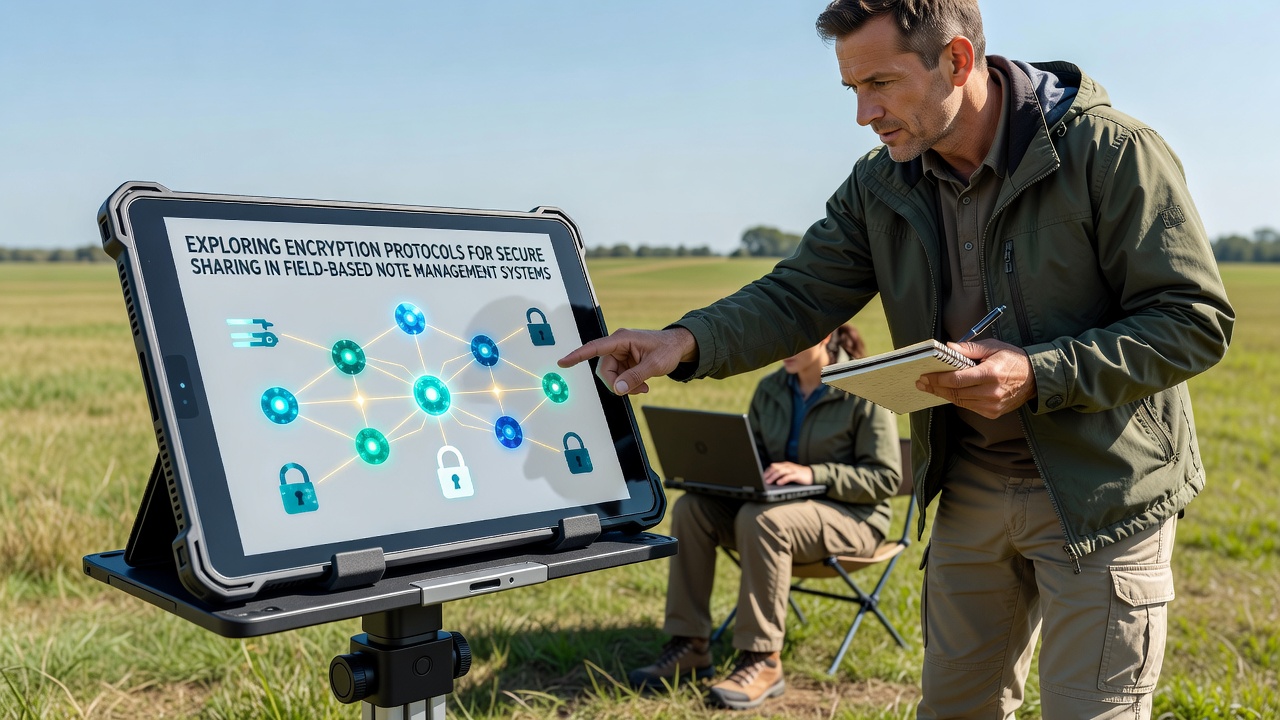
Hardware constraints in rugged tablets and smartphones influence protocol selection because battery life and processing power limit the complexity of cryptographic operations that can run continuously. Engineers have tested lightweight variants of public-key infrastructure that offload certain computations to cloud resources while keeping private keys on local devices and this hybrid model appears in several commercial field note platforms. As of October 2026 ongoing refinements to post-quantum algorithms continue to influence how vendors plan future updates for long-term data confidentiality.
Access control mechanisms integrate with encryption through attribute-based schemes that tie decryption rights to user roles or location parameters and this setup allows project managers to grant temporary sharing privileges without exposing full datasets. Studies from research institutions show measurable reductions in breach incidents when such layered approaches replace simple password-based sharing in distributed teams. Field crews often discover that these systems require careful policy configuration to maintain usability during time-sensitive collection tasks.
Integration Challenges and Solutions
Interoperability between different field note applications demands standardized key formats and protocol support so that data exported from one system decrypts correctly in another. Government agencies in Canada and Australia have published guidance on selecting compliant encryption suites that align with national security requirements and these documents help organizations avoid vendor lock-in. Teams that coordinate across borders frequently reference these resources when designing workflows that span multiple jurisdictions.
Key management presents ongoing operational hurdles because lost devices or personnel changes can disrupt access to shared archives and recovery procedures must balance security with practicality. Automated rotation schedules combined with secure backup channels address many of these issues while maintaining audit trails that satisfy regulatory reviews. Evidence from deployment case studies reveals that organizations investing in centralized yet encrypted key stores experience fewer workflow interruptions during extended field campaigns.
Conclusion
Encryption protocols continue to evolve in response to both technological advances and the specific demands of field-based note management and the combination of symmetric ciphers asymmetric exchanges and transport protections creates layered defenses suitable for remote operations. Organizations that follow established standards from bodies like the National Institute of Standards and Technology while incorporating guidance from additional regions position their systems to handle secure sharing effectively. Continued monitoring of protocol updates remains essential as field documentation practices expand into new environments and data sensitivity levels increase.