Otto Coleman · 22 September 2026
Examining Mobile Synchronization Challenges in Distributed Field Documentation Workflows
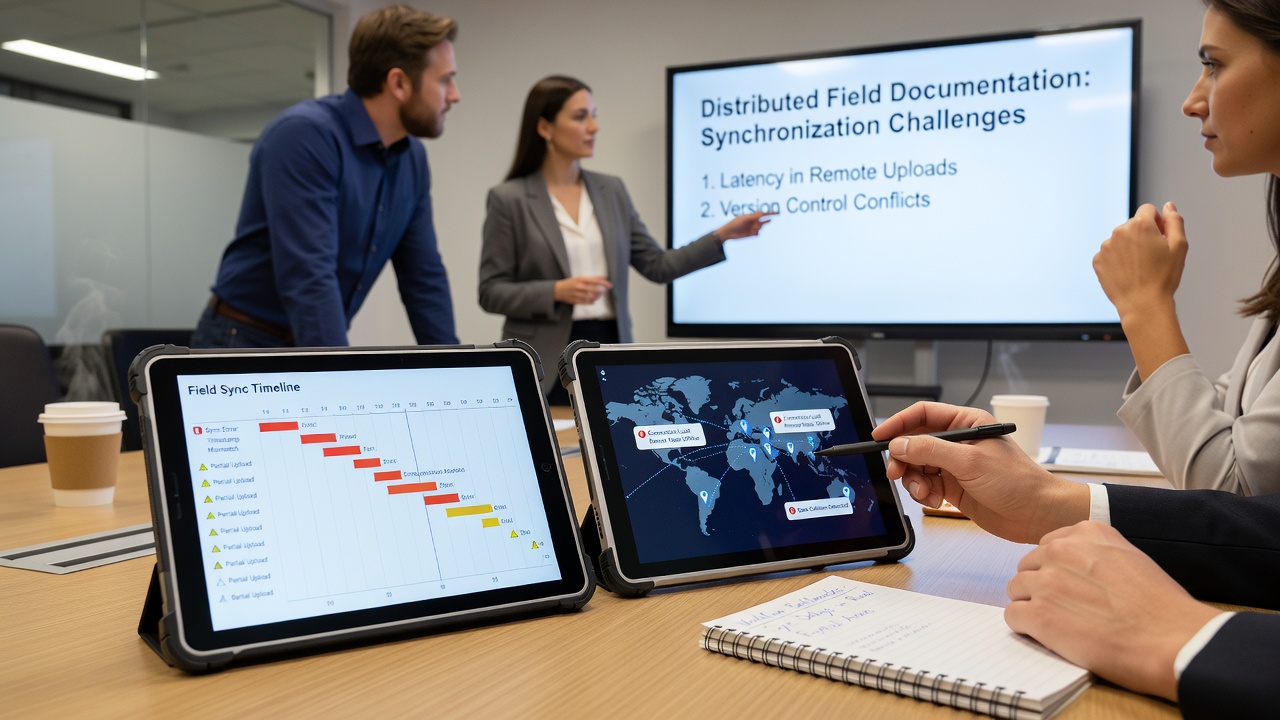
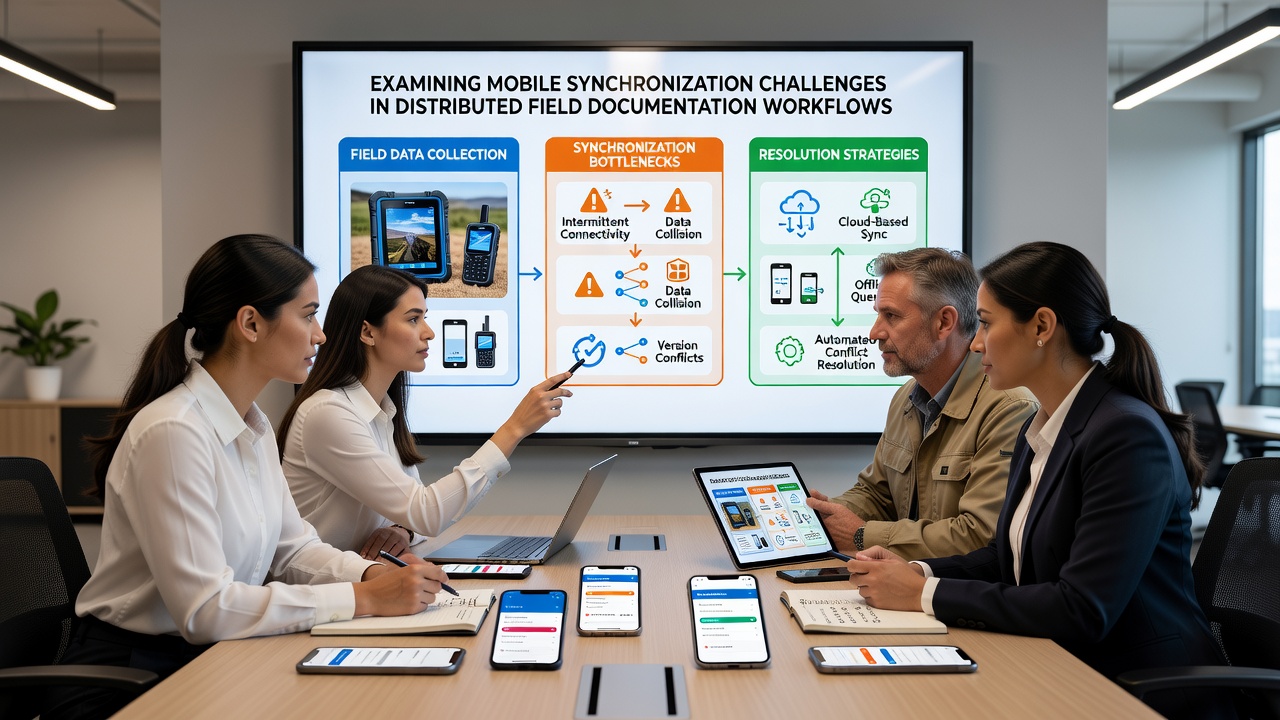
Distributed field documentation workflows depend on mobile devices to capture observations, measurements, and records across multiple sites, and synchronization becomes essential when teams operate in separate locations with intermittent connectivity. Researchers have documented how data collected on smartphones and tablets must merge into central repositories without loss of detail or introduction of conflicts, yet factors such as variable network coverage, device heterogeneity, and concurrent edits create recurring obstacles that slow project timelines and increase error rates.
Core Elements of Field Documentation Systems
Teams in construction, environmental monitoring, and infrastructure inspection typically use mobile applications that combine GPS tagging, photo capture, and structured forms to record site conditions, while central servers handle aggregation and reporting. Data flows from edge devices to cloud or on-premise databases through scheduled or event-triggered uploads, and observers note that success hinges on reliable two-way exchange so that updates from one worker reach colleagues before they duplicate effort or base decisions on outdated information. Studies indicate that latency spikes above 500 milliseconds often trigger partial sync failures, particularly when files exceed several megabytes in size.
Connectivity and Latency Constraints
Remote sites frequently lack consistent cellular or Wi-Fi signals, forcing devices to queue changes locally until a connection reappears. According to findings from the European Commission's Joint Research Centre, field operations in rural regions experience average outage durations of 18 minutes per hour during peak activity periods, which fragments the timeline of documentation events and complicates audit trails. Devices must therefore implement robust queuing mechanisms that preserve metadata integrity, including timestamps and user identifiers, while avoiding duplication when multiple uploads occur after reconnection. Compression algorithms and delta encoding help reduce payload sizes, although these techniques introduce their own processing overhead on lower-powered hardware.
Data Conflict Resolution Mechanisms
When two workers edit the same record simultaneously, systems must apply resolution rules that maintain accuracy without requiring constant manual intervention. Operational transformation and last-writer-wins strategies appear in many commercial platforms, yet field studies reveal that context-specific rules, such as prioritizing measurements over annotations, reduce downstream rework. The National Institute of Standards and Technology has published guidelines on conflict detection that emphasize logging every change at the attribute level, allowing automated merges where possible and surfacing irreconcilable differences for human review. Implementation varies by software vendor, and organizations report that custom scripting often becomes necessary to align these rules with existing compliance requirements.
Security and Compliance Considerations
Transmission of sensitive site data over public networks raises encryption and access-control demands that mobile frameworks must satisfy. End-to-end encryption protects payloads during transit, while role-based permissions limit which users can view or alter specific document sets. In September 2026, updated directives from Canadian federal agencies on digital record retention are scheduled to take effect, requiring audit logs that capture every synchronization event wth cryptographic verification. Organizations operating across borders must therefore maintain compatibility with multiple regulatory frameworks, which adds configuration complexity to already strained mobile clients.
Device Heterogeneity and Resource Limitations
Field teams rarely standardize on a single hardware model, and differences in operating system versions, storage capacity, and battery performance affect sync reliability. Applications running on older Android devices may lack support for newer background synchronization APIs, resulting in missed uploads when the screen turns off. Memory constraints also limit the size of local change logs, forcing earlier purging that can erase uncommitted edits if connectivity does not return promptly. Developers address these issues through adaptive polling intervals and selective data prioritization, yet performance testing across device fleets remains resource-intensive.
Emerging Approaches to Mitigation
Edge computing nodes deployed at temporary base camps now perform intermediate aggregation before forwarding batches to central servers, shortening the distance data travels over weak links. Peer-to-peer synchronization between nearby devices offers another avenue when cellular service drops, allowing workers to exchange recent changes directly via Bluetooth or Wi-Fi Direct. Pilot programs conducted by academic research groups demonstrate that hybrid mesh networks can maintain document consistency within acceptable bounds even during multi-hour outages. Machine-learning models trained on historical connectivity patterns further optimize upload scheduling, predicting windows of reliable bandwidth and deferring non-critical transfers accordingly.
Conclusion
Mobile synchronization in distributed field documentation continues to evolve through incremental improvements in queuing logic, conflict algorithms, and network resilience rather than any single breakthrough. Continued measurement of failure modes across varied environments supplies the data needed to refine these systems, and organizations that track synchronization metrics at the field level gain clearer visibility into where workflow friction originates. As regulatory expectations and hardware capabilities shift through 2026 and beyond, the underlying requirement for accurate, timely data exchange remains unchanged.